What 98% Local Sourcing Says About Food Brand Relevance
At ET FoodXP 2026, leaders from IKEA, Wow! Momo, Nando's and Cremica argued consistency, localisation and trust outweigh constant innovation.
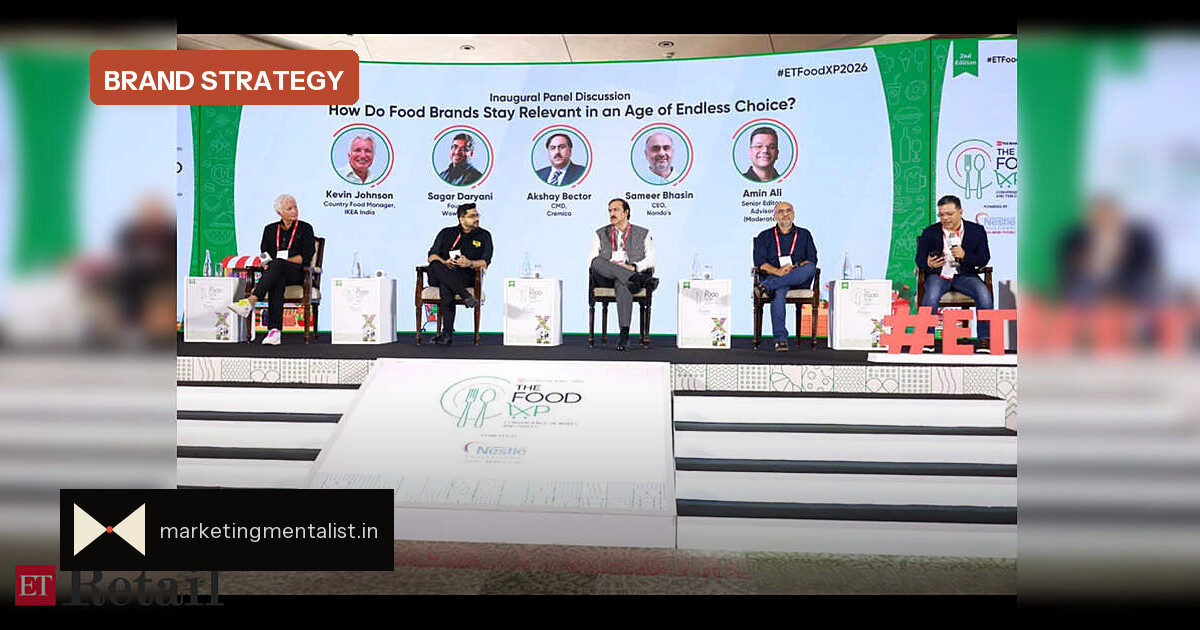
At ET FoodXP 2026, leaders from IKEA India, Wow! Momo, Nando’s and Cremica landed on an unfashionable answer. When consumers can choose from more cuisines and formats than ever, brands do not stay relevant by constantly launching new products. They stay relevant by keeping their core promise, adapting the entry point to local taste and refusing to trade consumer trust for a quick financial win.
Identity first, localisation second
Kevin Johnson, Country Food Manager at IKEA India, said the brand’s food story began as a way to keep shoppers in stores longer. Eventually, products such as Swedish meatballs became part of IKEA’s identity. In India, that identity has not been replaced; it has been extended. Johnson described the approach as “staying true to your identity, but adapting to the local market.” That has meant samosas and Indian-flavoured dishes sitting alongside the Swedish menu.
Nando’s took a similar route. Sameer Bhasin, the chain’s CEO, said India’s large vegetarian base pushed the South African brand to build a stronger meat-free portfolio. Cashew-based sauces and locally tuned spice profiles were not designed to change Nando’s. They were built as a bridge, so customers unfamiliar with PERi-PERi chicken had a familiar way in.
Consistency gets harder as the network grows
Wow! Momo founder Sagar Daryani framed consistency less as identical store design and more as an identical promise of taste, quality and value. A founder can fix problems across ten outlets personally. Across hundreds, the answer is standard operating procedures, training, logistics and technology-enabled monitoring of attendance, service quality and operations.
His menu logic was also about restraint. A small set of core products and sauces can power a much larger menu. “Scale is never a problem for innovation. It’s the complexity that you build,” he said.
Trust is a long-term asset
Cremica’s Akshay Bector warned that short-term financial decisions can quietly destroy years of brand-building. Cutting quality or weakening standards may improve a quarter, but it damages consumer trust that took much longer to earn. Standardisation, sourcing discipline and consistent execution are the real safeguards.
He also pointed to health as an early signal, not a future trend. Consumers are reading labels and debating glycaemic index, dietary fats, omega balance and sugar. Brands that act before a preference becomes mainstream can prepare their portfolios without chasing every viral ingredient panic.
The 98% local trust play
Johnson offered a number that made the localisation strategy concrete: IKEA produces and sources about 98% of its food products in India. This is not just a procurement detail. It is a way to integrate with local suppliers, create jobs and build relevance beyond the store. Indian suppliers could eventually serve other IKEA markets in Asia, he suggested.
Daryani added a reality check on the broader restaurant market. Value price points such as Rs 99 and Rs 199 work for volumes, but they squeeze margins. Tier-two and tier-three markets offer growth, but opportunity alone does not guarantee sustainable returns. Regulatory clarity and measured enforcement also matter when social media can accelerate reputational damage.
What marketers should take away
- Keep the core promise stable; do not expect novelty to carry the brand.
- Localise the entry point, not the identity — add a samosa, keep the meatball.
- Simplify operations before you expand the menu.
- Treat trust as a balance sheet item that short-term savings can erode.
For brand managers outside food, the lesson is portable. In a crowded market, differentiation is not just what you launch. It is what you refuse to compromise when growth puts pressure on the brand.
Source: ETRetail.com