The $681.3M psychology behind pop-star residencies
Why Harry Styles, Usher and Adele are betting on destination shows—and what the format reveals about scarcity, status and fan economics.
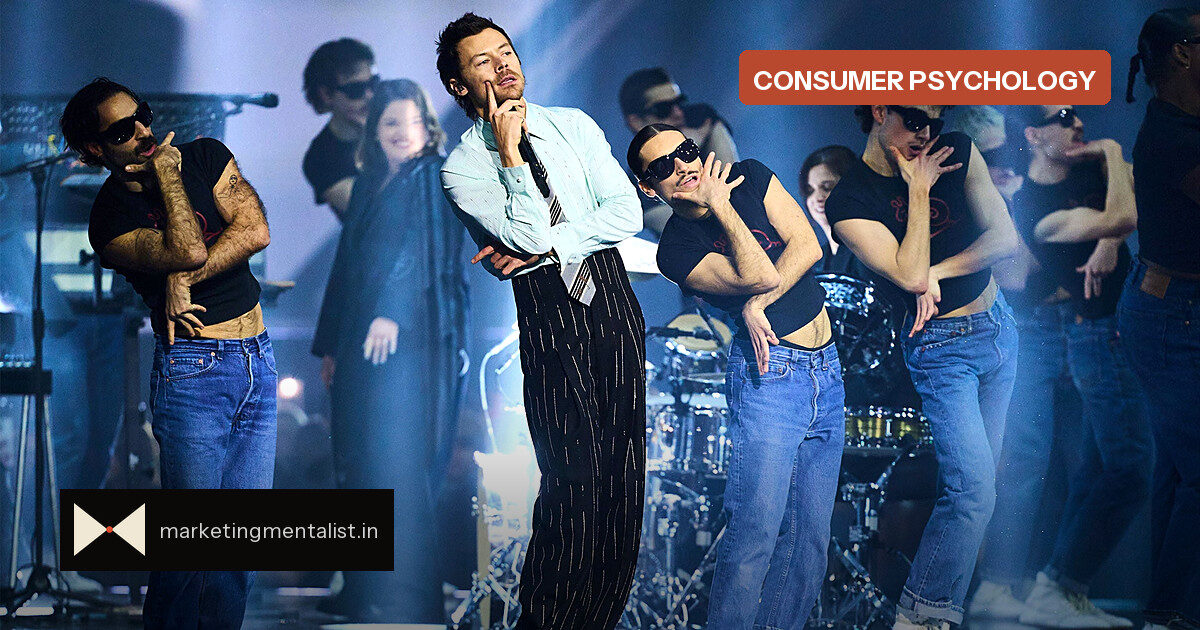
Residencies were once the music industry’s retirement lap. Today they are a masterclass in selling scarcity—and the numbers are impossible to ignore.
Harry Styles is closing a 30-date Madison Square Garden residency that ends Halloween weekend. Usher, Katy Perry and Lady Gaga have taken the Las Vegas format to younger audiences. Adele played a 10-date Munich residency in 2024, and Bad Bunny’s 31-date Puerto Rico run generated more than $200 million for the island’s economy.
The clearest proof comes from Celine Dion. Across 16 years and 1,141 performances, Billboard puts her Las Vegas residency gross at $681.3 million.
From “final stop” to festival energy
Mitch Rose, Creative Artists Agency’s head of North American touring, says the model has evolved from 1960s hotel shows into something closer to Coachella. People travel from around the world to share one experience—not simply to hear one set list.
“When we announced Harry’s residency, the Garden was the only place in America that we were playing in 2026,” Rose said. “There’s a uniqueness.”
That uniqueness is doing heavy psychological work. When supply is fixed—one city, one venue, limited nights—fans decide faster, pay more, and travel farther. The event becomes a status signal and a shared story, not merely a concert.
Usher, whose Vegas residency ran in 2022 and 2023, told The Associated Press the consistency was part of the appeal: “I like the idea of what I’ve found in Las Vegas. It gives me an opportunity to settle. I have children now. I got a life.”
The operational logic brands can borrow
For artists and promoters, residencies cut transport and production costs. John Meglen, co-CEO of Concerts West, says not moving people and equipment across cities saves huge money. Rose adds that staying put is “good mental healthcare for the artist.”
The format also allows ambitious staging. At the 516-foot-wide Sphere, Carín León became the first Latino artist to hold a residency, citing the venue’s creative tools.
Dion, who holds the record for the highest-grossing Vegas residency, recently opened a run outside Paris—her first series since disclosing stiff-person syndrome. Meglen calls Paris her strongest market, which shows the format follows fan density as much as venue reputation.
Yet the pricing tension is real. Sara Feigin, a Styles fan in New York, notes that tickets range from under $100 to about $1,000, plus travel for out-of-towners. “You’re playing over 30 days at the same venue, why is this $300?” she said.
That tension is what marketers should watch: scarcity can support a premium, but only when the experience feels genuinely unrepeatable.
What to do with this
Residencies are not really about geography. They are about framing. The product is not the seat—it is one-time access to a moment.
- Constrain availability. One city, one window, one flagship experience beats many faint copies.
- Build a destination. Pop-up shops, fan meetups and local culture turn attendance into an event.
- Let skipped markets feel the loss. Meglen argues that pausing touring gives markets “a breather” and creates future demand.
- Anchor the story in a proof point. Dion’s $681.3 million run makes the format credible and aspirational.
Behavioural researchers call this the scarcity heuristic: when an opportunity appears hard to get, people infer it is worth getting. Residencies manufacture that signal deliberately—one city, limited nights, no promise of a sequel.
The next time you design a product launch or event, ask what would happen if you narrowed access instead of expanding it. The answer may look a lot like a sold-out arena.
Source: Fast Company