Jio’s AI Promise, Explained by Mummy’s Dal Recipe
The future of 5G, cloud and AI gets easier to understand when Mummy asks for a dal recipe—and the network quietly disappears.
Some technologies arrive as a spec sheet. Others arrive as a question: ‘Mummy, what do I make with the dal I have?’
The second route is how Jio’s stated ‘AI Everywhere for Everyone’ priority becomes legible—not through the words 5G and cloud first, but through a familiar kitchen scene that people can already imagine.
The demo at the kitchen counter
Picture a mother opening an AI assistant while the pressure cooker is still cold. She has toor dal, tomatoes, one onion, no ginger, and roughly forty minutes before lunch. She asks what to make. The assistant offers a recipe, adjusts the spice level for a child, and tells her to keep the flame low.
She does not ask whether the answer arrived over 5G or from a cloud server. She asks whether dinner works. That is the quiet behavioural shift underneath the technology story: people judge the future by the outcome, not the network path that delivered it. In that one question, artificial intelligence stops being abstract and becomes a household helper.
The scene also changes who gets to explain the technology. It does not require a whiteboard, a tower diagram, or a technical demo. It requires a mother, a few ingredients, and a hungry family. That is a much easier story to repeat.
From data cost to data habits
The context is already part of India’s recent media memory. In 2016 Jio launched with the Welcome Offer: unlimited 4G data, voice, video, and apps, according to Reliance Industries. The service reached 100 million subscribers within 170 days of launch, as company-reported in Reliance Industries’ Integrated Annual Report 2016-17. Today, Reliance Jio Infocomm reports 524 million+ customers as of March 2026.
The question India asked has moved from ‘How much does data cost?’ to ‘What can we do with data?’ A mother asking for a dal recipe is one small, ordinary answer.
Marketers can read that as a shift from selling access to selling usefulness. Access is simple to measure; usefulness is shown in the rhythm of a normal day. The dal recipe, the video call to a parent, the shop that remembers a customer—these are the moments where the network becomes invisible and the benefit stays visible.
The psychology of invisible infrastructure
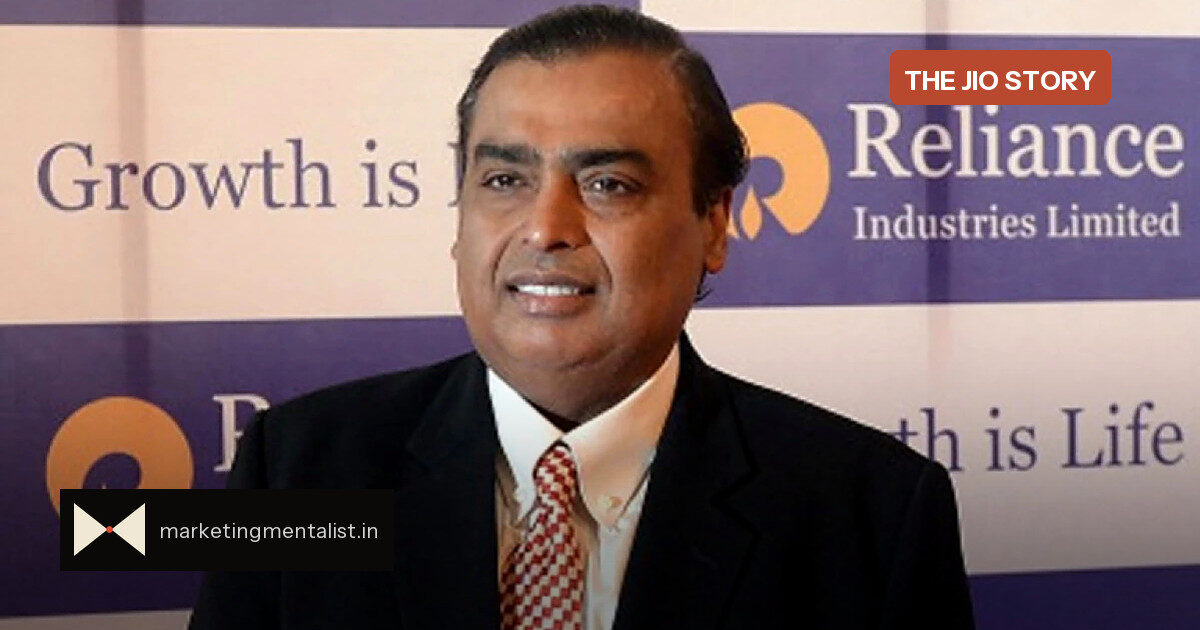
For brand managers, the lesson is that unfamiliar technology is best explained backwards. Jio’s stated priorities—shared at Reliance Industries’ 48th AGM in August 2025—include connecting every Indian, bringing digital services home, digitising businesses, and ‘AI Everywhere for Everyone.’ But most people will not hear those priorities as a strategy. They will experience them as a recipe that adapts to the ingredients they already have, a call that connects without being configured, or a shop that remembers their usual order.
Here is what helps the story land:
- Start with the familiar outcome, not the network.
- Let a non-expert narrate the benefit in daily language.
- Keep the infrastructure invisible unless someone asks.
When 5G, cloud and AI are reduced to dinner on the table, they stop sounding like a platform and start feeling like a habit. That is the future made simple—not because the technology is small, but because the demo is close. This is the marketing brief hiding inside a dal recipe: make the hardest technology feel like a familiar pair of hands in the kitchen.