Why Maruti Suzuki Says Mass Market Isn’t a Price Point
Maruti Suzuki's Partho Banerjee on why the mass market should be defined by value, not price—and how Nexa, Arena and SUV plans fit a changing buyer.
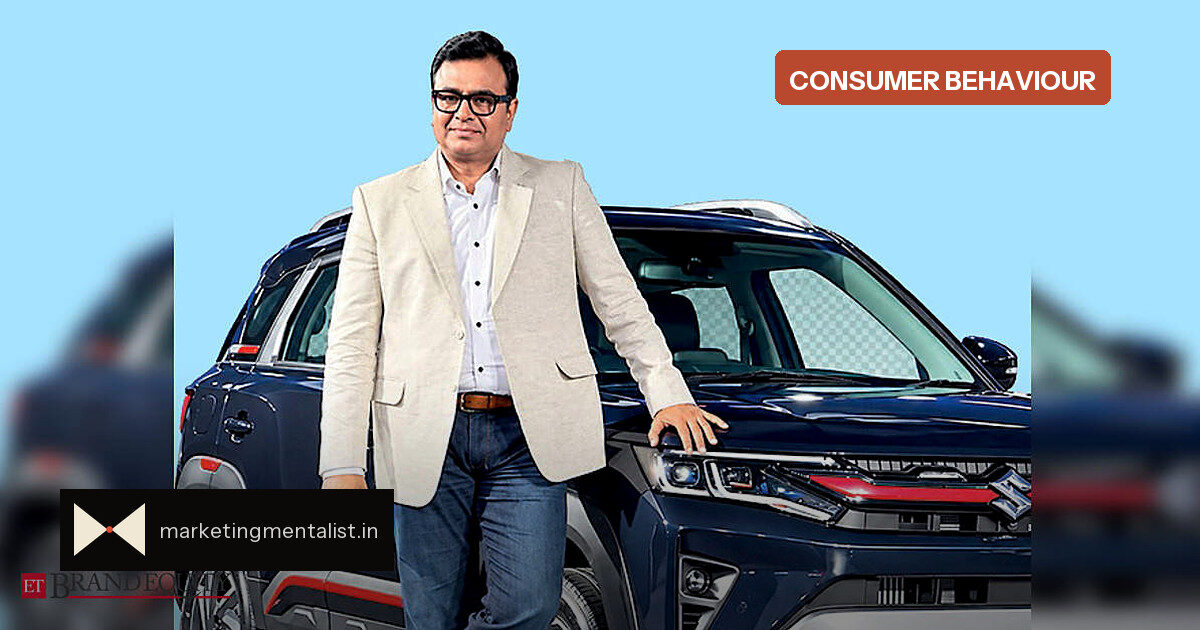
The Indian car buyer has stopped asking “what does it cost?” before “what do I want?” That is the signal from Maruti Suzuki’s senior executive officer, marketing and sales, Partho Banerjee. In a conversation with ETBrandEquity, he laid out a view that challenges the usual entry-level playbook: the mass market, he argues, should not be defined by a price point.
Value means different things to different people
Ten years ago, Banerjee says, the primary need was mobility, fuel efficiency, trust and value. Today the buyer is more aspirational, more experience-led and willing to spend more. That is why Maruti launched Nexa in 2015: a customer who bought a ₹5–6 lakh car may start looking for more as the wallet grows. The average ticket size is now around ₹15–16 lakh and is expected to move further up.
The lowest price point, he cautions, is a misnomer. Products at the lowest price point have not always worked. What wins is the overall value proposition, and value is not one thing. One buyer may want mileage, another styling, another technology or driving experience.
His example: a Baleno buyer may expect ventilated seats or an advanced driver-assistance system. You cannot put every feature on every model, so the design has to match what that particular customer wants. The goal, he says, is brand stickiness—keeping the buyer inside Maruti’s loop as needs and wallets evolve.
A two-channel brand strategy, split by mindset
Nexa and Arena are not cheap versus premium, he explains. Nexa is about exclusivity, sophistication and premiumness; Arena is inclusive, youthful and dynamic. The product matters, but “the brand is the soul.” Maruti uses research tools such as SIGMA Milieus, which groups customers by subjective life worlds, personal values and daily habits rather than only demographics or price.
That shows up in positioning:
- Swift is pitched at the playful, youthful buyer.
- Baleno is for someone who feels they have arrived.
- Brezza targets peppiness, while Fronx is positioned for refined taste.
- Swift sits in Arena and Baleno in Nexa, with SUVs like Grand Vitara in Nexa.
This is segmentation as a promise, not a price tag—a cleaner way to stretch a brand without confusing its core.
What this means for the SUV boom and entry-level features
SUVs now account for about 57% of the passenger vehicle market, and Banerjee expects that to rise to 65–66% by 2030. Maruti plans seven SUV models over the next five years, and its SUV share has climbed from 12% in 2023 to 22% in August this year, with about 60,000 SUVs sold a month.
Still, he says, choice matters. Last year the Dzire was the number one model despite around 60 SUV models in the market. The five-door Jimny also made more sense for India than the three-door format Maruti had tested with the Swift but which did not find acceptance. Hatchbacks, sedans and SUVs will all continue to play a role.
Entry-level expectations have moved up too. Even the first-time buyer wants styling, good exteriors, basic safety, air-conditioning and a certain driving experience. Within a clear price ceiling, they have “must-have” features in mind. India remains under-motorised—34 cars per 1,000 people compared with Japan’s 800—so the two-wheeler customer who aspires to a car will arrive with a yardstick, likely wanting air-conditioning and airbags.
The marketer’s dilemma
For Banerjee, the real tension is anticipating what aspirations will look like over the next decade. Every consumer is value-conscious; the difference is what they consider valuable. Today’s buyer combines aspirations with functionality. The marketer’s job is to read the mind of the future customer, and how fast a brand can pre-empt that is the dilemma. The takeaway is simple: give the customer what they want—but understand that what they want keeps moving.
Source: ETBrandEquity.com