35 Festive Days Outwork 90: The SKU Logic Behind Model Codes
Why do washing machines carry codes like WA80F08S2L? Model codes protect pricing but erase brand recall—and a hybrid fix is emerging.
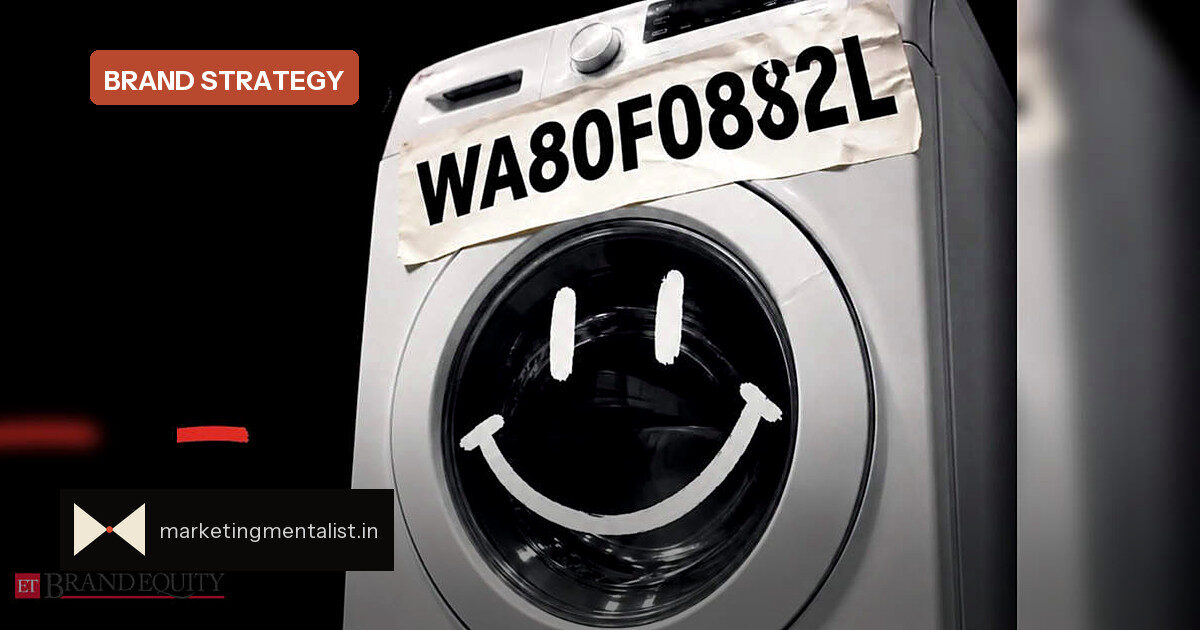
Ask someone which washing machine they own and they will probably name the brand and the capacity. Ask for the model, and you get a shrug. That is because the machine carries an alphanumeric code such as WA80F08S2L rather than a name a human being can recall.
Appliances are different from phones and cars. A refrigerator is not something you set on the table in a meeting, Ritesh Ghosal, co-founder of Crisp Insights and former CMO of Croma, says. “Phones and car keys are.”
The quiet logic of model codes
Those codes are not accidental. Model numbers help manufacturers manage sprawling catalogues, protect retailer relationships and make direct price comparison harder. If an identical refrigerator is available cheaper elsewhere, the retailer risks losing the sale. The answer is often a slightly modified product carrying a different model number.
“It is differentiation for the sake of differentiation,” Ritesh says. Deba Ghosal, founder of Boardwalk & Co and former CMO of Voltas, calls the alphanumeric route “a lazy way of going about it.” It kills the chance to build meaningful differentiators around consumer benefits, he argues.
The incentives intensify during festive selling. Ritesh says these “35 days are as good as a 90-day period in any other part of the year.” Retailers stock up to qualify for additional margins and then discount aggressively to clear inventory, which encourages exclusive variants and more codes.
The consumer-facing cost
While catalogues keep expanding, recall shrinks. Marketing money often moves towards promotional offers rather than clear product propositions. Brand specialist Harish Bijoor warns that companies underestimate how brand damage travels: an unhappy customer blames the brand, not the individual model.
The pattern is not inevitable. LG Electronics India’s early line-up included GoldenEye, which tied television technology to parental worries about children’s eyesight, and Flatron. Sanjay Chitkara, co-chief sales and marketing officer, says Flatron became so impactful that consumers called any flat-screen TV a Flatron. Voltas’s All Weather and Adjustable ACs were quickly copied by rivals. Today LG uses sub-brands for traditional retail and keeps alphanumeric codes largely for online channels; its Essential Series, for example, runs through smaller sub-dealers and distributors.
This is a mental availability problem. A name such as Sumo or Flatron creates a verbal asset a buyer can recall and ask for; WA80F08S2L does not.
Hybrid naming is the workable middle
Voltas follows a selective approach, with Vectra, Virtus and Venus AC ranges aimed at different price segments. Prasenjit Basu, head of marketing and corporate communications at Voltas, says refrigerators and washing machines cannot support the same variety of sub-brands, so the company uses a “different model, different channel” strategy to protect market operating prices.
India’s fragmented retail landscape makes a single global naming strategy difficult. Even the biggest partner contributes only 2–3% of overall business, Chitkara says, so product nomenclature cannot simply match a global playbook.
Symphony shows the hybrid in action with focused cooler and geyser families such as Diet, Sumo and Silenzo. CMO Gaurav Sarda says a Sumo comes in 75-litre and 115-litre variants without losing its name. Differences between variants can be 15–20%, he says, and “the differentiation has to be meaningful rather than quantitative.” Newer Spa and Sauna geysers, positioned around hair-loss control, make the benefit easier to relate to.
Worth copying:
- Build a sub-brand around a credible consumer benefit, not a specification.
- Keep alphanumeric model codes as internal tools, not the public identity.
- Differentiate channel variants only when the difference is meaningful.
The goal, says Deba, is a shopper who walks in asking for the feature by name. The failure, he adds, is the shopper who says, “I want an AC. I don’t know which one to buy.”