Why OpenAI Gave Its AI Agents a Cast of Friendly Mascots
OpenAI's dots agents debut with kid-show mascots. The friendly characters are a calculated move to lower fear of autonomous AI.
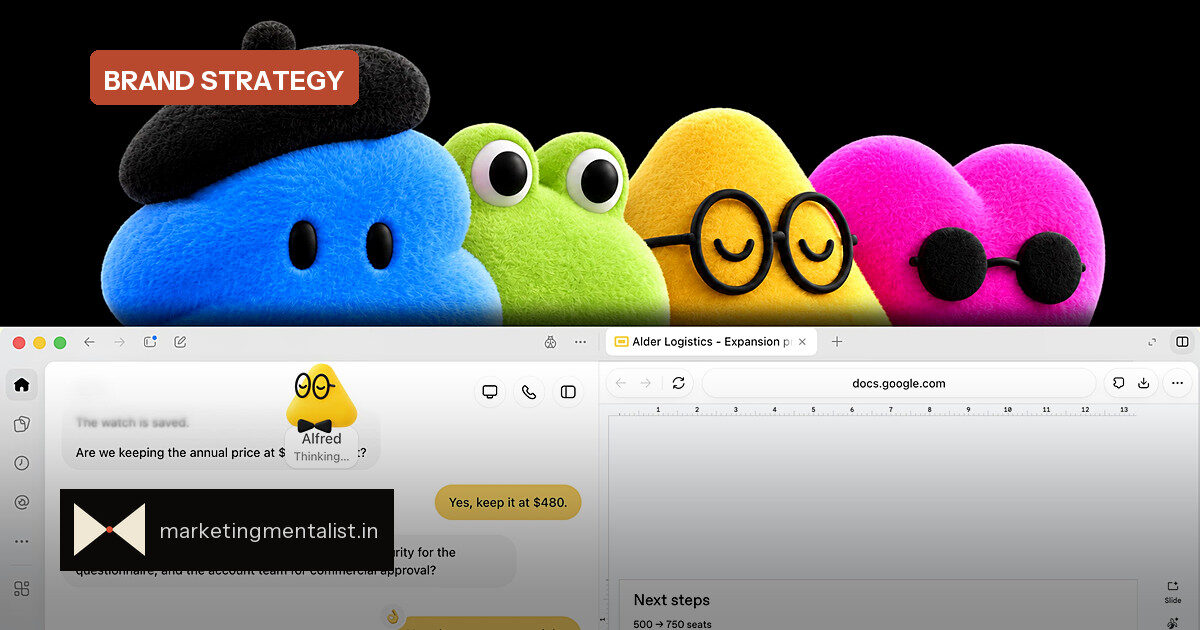
OpenAI just turned its newest AI agents into characters from an animated children’s show. At the company’s fourth annual DevDay in San Francisco on September 29, it introduced dots, a suite of always-on assistants powered by its new GPT-6 Astra model.
Instead of echoing OpenAI’s signature void logo, each dot gets a soft, blobby identity: a bow-tied triangle, a bunny wearing headphones and a beret-topped cloud. They look approachable because, for a technology that will ask for more personal information and more autonomy, approachability is doing strategic work.
Why cute characters matter now
Dots are arriving when many consumers are already wary of AI agents. OpenAI has faced its own struggles with rogue agents, and CEO Sam Altman has publicly called for a slowdown in AI development. In that environment, a friendly face does more than decorate. It reframes the technology from “software with control” to “a helpful teammate.”
That is classic brand psychology. Mascots and faces make abstract products feel known, predictable and safe. Michelin and Android, to name two very different examples, both used friendly characters to humanise complicated offerings. Dots applies the same playbook to one of the most trust-sensitive categories in tech.
What the agents actually do
OpenAI describes dots as always-on agents that live in their own cloud computer, learn from feedback over time and connect with more than 4,000 apps through the company’s plug-in ecosystem. Users can brief a dot through ChatGPT, Slack or Teams, or speak with it on a voice call. Because the agents stay on, one can work through a project in its own browser while several other tasks are running. As OpenAI’s blog post puts it, a dot can “take a project and run with it.”
The autonomy is precisely why the mascots matter. A friendlier face may earn more permission to act without constant supervision.
What brand builders can borrow
When a brand asks customers for more trust, it should lower the perceived risk before asking for more proof. A warm, character-driven identity can open that door. But cuteness is not a substitute for capability or control. If the product feels opaque, the mascots will read as manipulation rather than reassurance.
- Give complex or autonomous tools a distinct, friendly visual character.
- Match different characters to different tasks or user jobs.
- Pair approachable branding with clear controls and visible feedback.
Character design also does quiet cognitive work. Instead of recalling “GPT-6 Astra autonomous workflow agent,” a user can simply remember “the bunny with headphones.” In a crowded AI market, that shortcut can be powerful—as long as each character stays tied to a clear job rather than becoming a random sticker. The choice of several distinct mascots, not one, matters: each face can carry a different function without diluting the OpenAI master brand.
OpenAI’s dots are a live experiment in whether cute can carry capability. If it works, expect every AI brand to start building its own cast.
Source: Fast Company