Jio Story: How Local Voices Made the Network Feel Like Home
Village calls, hostel hotspots, regional creators and festival streams turned data into belonging. A look at the psychology of a network that feels local.
Before data became invisible, it was the guest that made everyone gather. A phone placed on a charpai. A room full of students around one screen. A family on a festival call, passing the phone like a diya. Jio’s story is often told as a scale story, but its marketing psychology is built in these small local rituals.
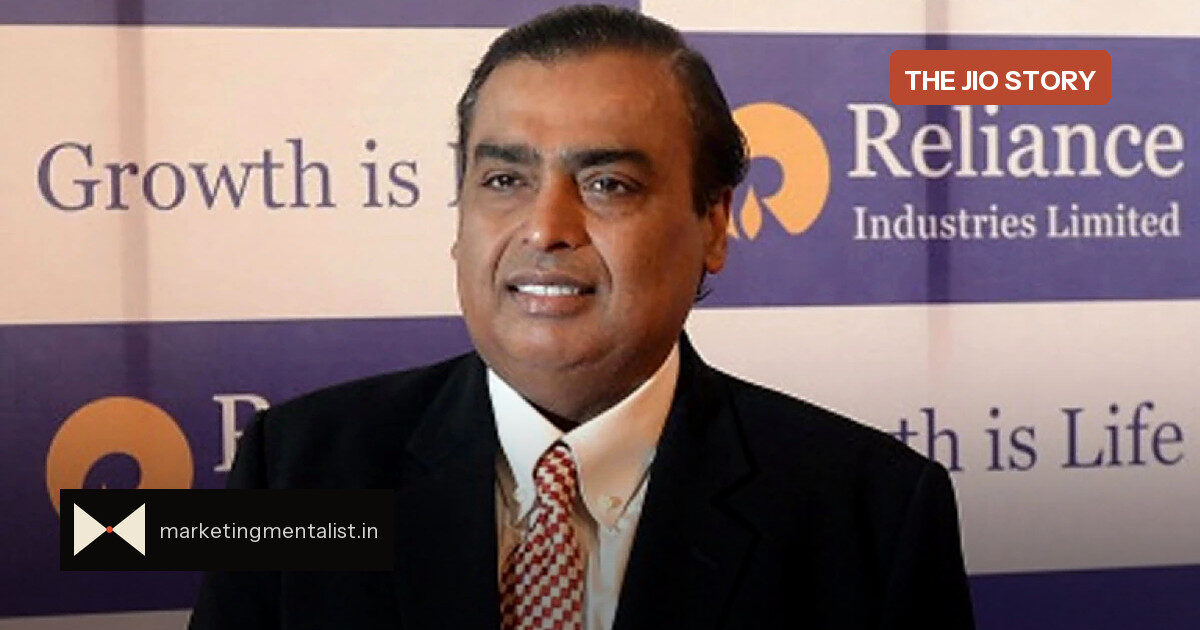
In 2016, Jio launched with the Welcome Offer: unlimited 4G data, voice, video and apps (Reliance Industries). The company reported 100 million subscribers within 170 days. The speed of adoption was remarkable, but the lasting memory was created by what people did once the meter stopped mattering.
The first video call became a family ritual
For families split between villages and cities, a video call did not replace a letter or a phone call. It added emotional presence: a grandparent could watch a child eat, see a new home, or bless a festival. The network stopped being talked about as a service and started being treated as a room where the family met.
The question India asked moved from ‘How much does data cost?’ to ‘What can we do with data?’
That is a classic consumer behaviour shift. When the cost question disappears, the brand can be judged on emotional value, not price.
Hostel Wi-Fi turned data into social currency
In hostels, one hotspot often became the shared living room. Students gathered for match screenings, movie finales, reels and late-night video calls. The person holding the connection became the informal gatekeeper of the group’s entertainment. Data was no longer an individual utility; it was social glue.
Regional creators gave the network many accents
Creators did not have to move to a metro or flatten their language to find a stage. A dialect, a local joke, a regional festival tip could travel as far as the algorithm would take it. The audience recognised itself in the content. This made the network feel like a place with many local voices, not one national broadcaster.
Festival moments put the calendar online
Festivals gave the network a recurring calendar. Live darshan, puja calls on speaker, harvest greetings from family members abroad, Eid and Diwali videos circulating in neighbourhood groups. These annual rituals kept bringing people back to the same behaviour, year after year.
- A grandmother singing on a video call because she trusts the screen.
- A hostel room huddled around one phone for a match or a reel.
- A regional creator speaking in their mother tongue and finding an audience.
Today, Jio serves 524 million+ customers (Reliance Jio Infocomm, March 2026; company-reported), and its ecosystem spans connectivity, entertainment, commerce, payments, devices, cloud and AI (Reliance Industries 48th AGM, August 2025). Its stated priorities include connecting every Indian, bringing digital services home, digitising businesses and making ‘AI Everywhere for Everyone’ (Reliance Industries 48th AGM, August 2025).
But the brand’s cultural signal is not the infrastructure; it is the memory of being local while reaching further. When a network disappears into a village call, a hostel huddle or a festival stream, it stops being a provider. It becomes a familiar place.