Why Hyundai’s Sheetal Devi Signing Is Smart Brand Psychology
Hyundai Motor India has named para archer Sheetal Devi its brand ambassador. The real lesson is in how earned, long-term endorsements build brand belief.
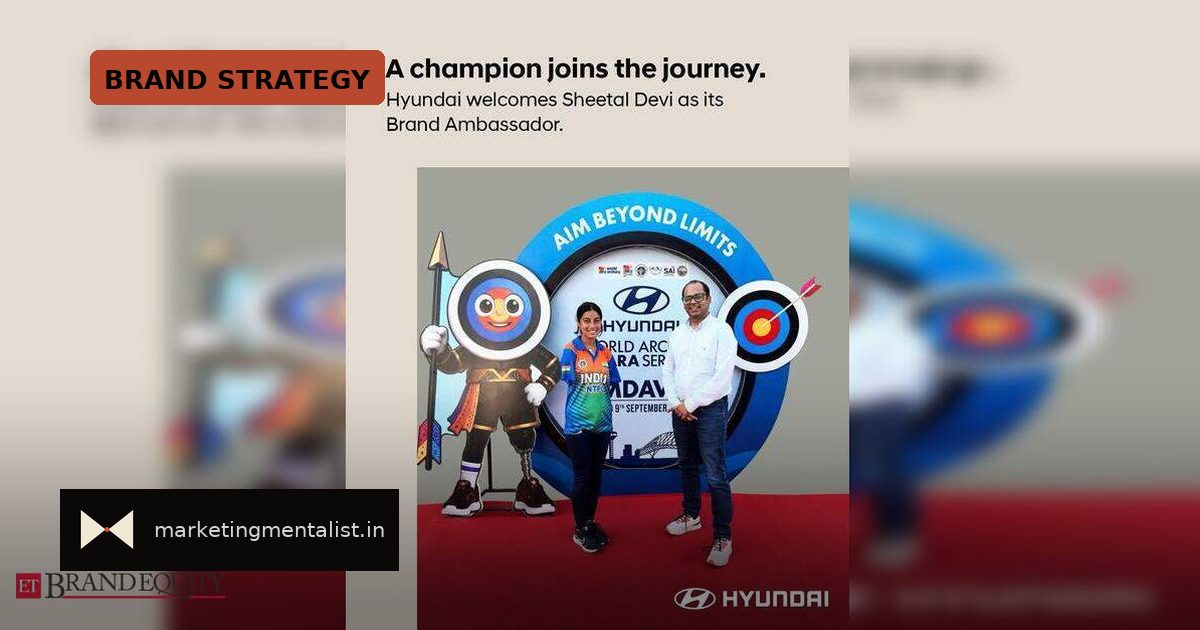
Hyundai Motor India has appointed world No. 1 para archer Sheetal Devi as its brand ambassador. On paper, it is one more celebrity signing in a market that produces them weekly. Look closer and it is a case study in how endorsement psychology actually works — and why most brands get it wrong.
What was announced
The automaker said it will work with the 19-year-old athlete across marketing campaigns, accessibility programmes and social impact communication tied to its “Progress for Humanity” positioning. Devi, an Arjuna Awardee and World Champion from Jammu and Kashmir, is the first Indian para-archer to be picked for an able-bodied national team.
Crucially, this is not a cold start. Hyundai has backed Devi since 2023 through its ‘Samarth by Hyundai’ initiative. Managing director and CEO Tarun Garg described her as “an emblem of what human determination can achieve when barriers are replaced by opportunities”, while Devi said she valued the trust the brand had extended to her journey.
The psychology: meaning transfer, not fame rental
Grant McCracken’s meaning transfer model explains celebrity endorsement in three steps: cultural meanings collect around a person, transfer to the brand, and then transfer to the consumer who buys the brand. The catch is that only specific, legible meanings transfer. A generic film star carries diffuse glamour that could belong to any category. An athlete who has literally competed without arms against able-bodied competitors carries something far sharper: engineered capability, persistence, mobility against odds.
For a mobility brand, that is a near-perfect semantic match. Consumers do not consciously decode this. They simply experience lower friction — the brand and the ambassador feel like they belong to the same story. Psychologists call this processing fluency, and fluency is routinely mistaken for truth.
Why the three-year runway matters more than the announcement
Most purpose-led endorsements fail a simple audience test: does this look like support, or like sponsorship arriving after the medal? Attribution theory says audiences constantly ask why a brand is doing something. When the answer looks self-serving, the message is discounted. When the brand’s involvement predates the fame, scepticism has nowhere to attach.
Hyundai’s 2023 association gives the 2026 announcement retrospective credibility. The endorsement is not a claim; it is a receipt.
The founder-and-brand-manager checklist
If you are evaluating an ambassador or a purpose platform, test it against five questions:
- Semantic fit: does the person’s core meaning overlap with your category benefit, or only with general fame?
- Evidence of prior commitment: can you show involvement that began before it was commercially convenient?
- Operational proof: is there a programme behind the campaign — in Hyundai’s case, accessibility work — or only a film?
- Single-mindedness: does the ambassador endorse eight unrelated brands, diluting transfer? Exclusivity of meaning beats reach.
- Multi-year runway: can you sustain it for three years, or will it die after one campaign burst and read as opportunism?
The wider signal for Indian marketing
India’s endorsement economy has long been dominated by cricket and cinema, priced on reach. What Hyundai’s move signals is a slow shift toward narrative-fit signings, where the ambassador’s biography does the strategic work that a tagline cannot. Para-athletes, in particular, offer something rare: an inspiration story that is genuinely earned rather than manufactured — provided brands resist the urge to flatten them into inspiration props.
That is the discipline here. Inclusivity communication only compounds when the brand also changes something — showrooms, controls, hiring, accessibility programmes. Otherwise the audience files it under advertising, and meaning transfer quietly stops working.
The takeaway for marketers is unglamorous: the most persuasive endorsement is the one you started paying for before anyone was watching.
Source: ETBrandEquity.com