Jio Story: 5G, Cloud and AI Through Mummy’s Dal
5G, cloud and AI become normal when they fit daily tasks. Mummy's dal recipe is a better adoption demo than any spec sheet.
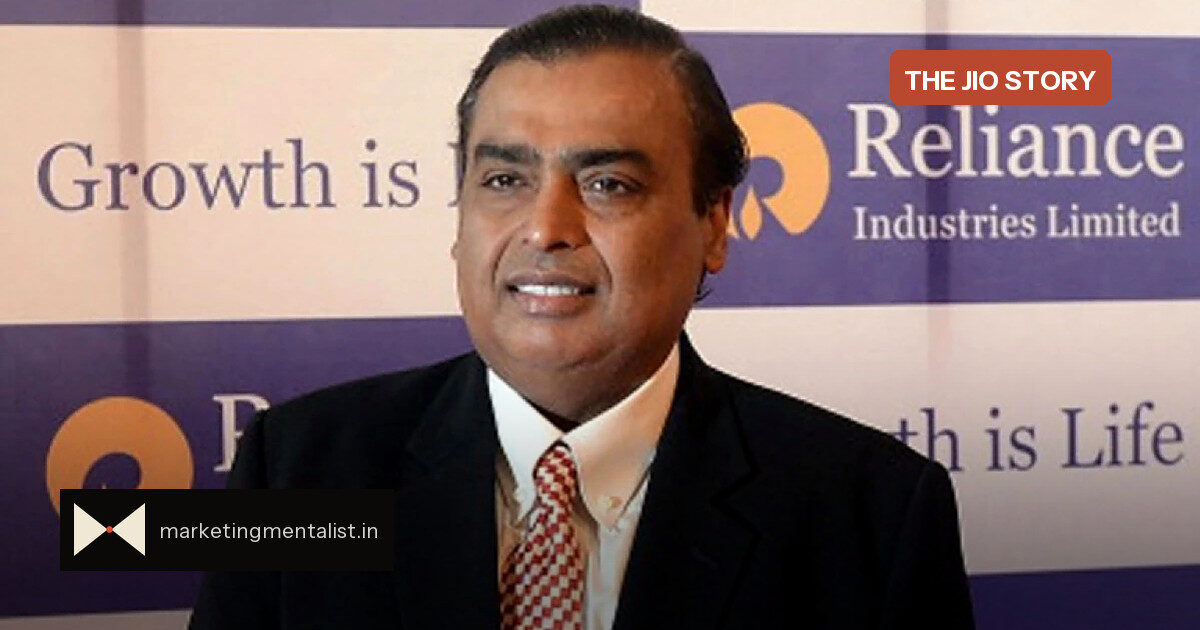
In 2016, Jio’s Welcome Offer made data feel suddenly abundant: unlimited 4G data, voice, video and apps (Reliance Industries). The service reached 100 million subscribers within 170 days of launch (company-reported; Reliance Industries Integrated Annual Report 2016-17), and the question began to shift from ‘How much does data cost?’ to ‘What can we do with data?’
Ten years on, that question has moved again. The future is no longer a spec sheet. It is Mummy asking the kitchen assistant for a dal recipe with less oil, no onion and enough for four.
The dal-recipe test
Imagine she does not search, compare tabs or scroll through a blog. She says what she wants in her own words, and the technology does the rest. That is how 5G, cloud and AI become legible: not as infrastructure, but as a meal getting made while she gets on with other things.
This is a consumer-behaviour shift. People rarely adopt ‘next-generation technology’. They adopt a result that fits an existing habit. The mother already knows how to cook dal. The AI’s job is to make that easier, not to ask her to learn something new first.
The adoption threshold is not bandwidth or model size. It is familiarity. When the request sounds like something already said in the kitchen, the technology stops being a visitor and becomes part of the household.
Making the future sound like a normal day
Jio’s stated priorities are to connect every Indian, bring digital services home, digitise businesses and push towards ‘AI Everywhere for Everyone’ (Reliance Industries 48th AGM, August 2025). That phrase only becomes meaningful when it turns into daily scenes:
- 5G is not a speed test. It is a video call that does not freeze when a train crosses a patchy stretch.
- Cloud is not a server. It is the kirana shop’s ledger that still remembers yesterday’s credit after a phone change.
- AI is not a chatbot. It is a kitchen helper that knows the family’s ‘less oil, no onion’ defaults.
Each example hides the technology and shows the outcome. That is the psychology of adoption: utility that disappears into the rhythm of life feels safer, wider and more usable than a breakthrough demanding attention.
The cloud as a new kind of memory
Small shops and small homes have always relied on physical memory: the khata, the recipe book, the cupboard with old documents. The cloud’s promise is continuity without the paper. When a shopkeeper can check a customer’s record from a year ago, or a family can find a video taken on an old phone, the technology stops being a feature and becomes trust.
Jio’s ecosystem today spans connectivity, entertainment, commerce, payments, devices, cloud and AI (Reliance Industries 48th AGM, August 2025). For the 524 million+ customers the company reports (Reliance Jio Infocomm, March 2026; company-reported), the next round of adoption may not look like a launch at all. It may look like fewer moments of friction in a day that already works.
What marketers can steal
The 2016 Welcome Offer was a pricing story. The next story is a demonstration story. Show the task, not the tower. If you want someone to adopt AI, do not say ‘AI’. Say ‘tell it how your family likes the dal’.
The future gets adopted when it feels less like the future and more like a familiar task finishing itself. The real interface is not a screen; it is the moment someone trusts the machine enough to speak in their own kitchen.