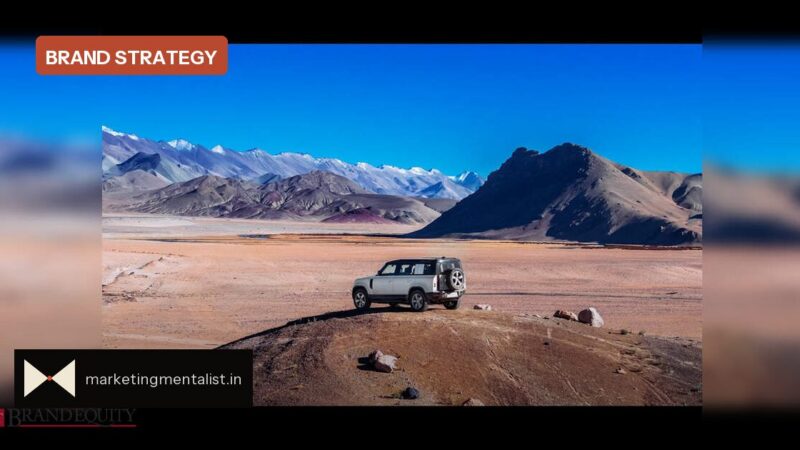
India’s Flat Tourist Numbers Are a Mental Availability Problem
Foreign tourist arrivals to India are set to stay flat in 2026. The deeper issue isn't price or visas alone - it's years of missing brand advertising abroad.
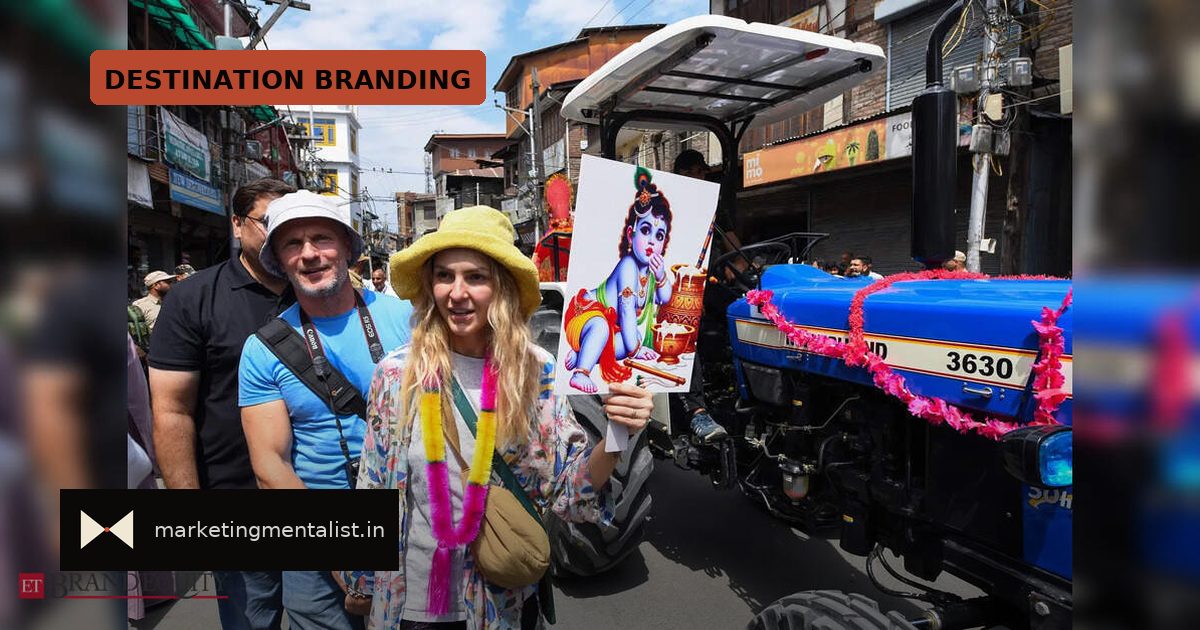
India’s inbound tourism story is stuck. Industry insiders told ETBrandEquity that foreign tourist arrivals (FTAs) this year will be flat at best against last year, with the Federation of Associations in Indian Tourism and Hospitality (FAITH) estimating 8-9 million foreign visitors in 2026.
For context: the Ministry of Tourism’s provisional numbers put 2025 arrivals at 9.15 million – down 8.1 per cent year-on-year and 16.3 per cent below pre-Covid 2019. April, the first month of the fiscal year, brought about 534,000 foreign tourists, 14.3 per cent lower than a year earlier and 31 per cent below April 2019.
The reasons cited are familiar: wars in Iran and Ukraine pushing up fuel prices and therefore international airfares, plus visa friction that has stalled roughly 20 per cent of inbound business from China. But the reason marketers should pay attention to is the third one – the sustained absence of global brand marketing for India as a destination.
What “exceptionally weak buzz” actually means
Rajeev Kohli, joint managing director of inbound specialist Creative Travel, described the buzz around India as “exceptionally weak”, saying interest from foreign travel agents and tour operators is close to non-existent, and blaming years of missing promotion for eroding the destination’s desirability.
Strip away the tourism specifics and this is a textbook mental availability failure. Byron Sharp’s framing is simple: brands grow by being easy to think of and easy to buy in a buying situation. A destination is bought exactly the same way. Someone in Berlin or Chicago decides in January where to spend eight days in November. Whatever surfaces in that moment – Vietnam, Portugal, Japan, Kenya – makes the shortlist. Everything else is invisible, no matter how spectacular it is on the ground.
India’s product hasn’t deteriorated. Its retrieval has. When you stop refreshing memory structures for several years, you don’t lose customers dramatically; you quietly stop being considered. That is the most expensive kind of decline because it never shows up as a lost sale.
The four gaps behind flat demand
- Salience: no consistent presence in source markets means no unprompted recall at the moment of choice.
- Price perception: costlier airfares raise the total cost of the trip, so the destination has to justify a bigger bet – which needs more desire, not less advertising.
- Friction: visa issues are a distribution problem. Demand you can’t fulfil is demand you never had.
- Trade confidence: when agents and operators sense no buzz, they stop pushing. In travel, the channel is a co-persuader.
Why Kohli’s INR 50 crore idea is smarter than it sounds
Kohli suggested that even roughly INR 50 crore spent on well-made homegrown social content and AI-generated videos, handed to the private sector to circulate, would meaningfully help inbound operators sell. His analogy is blunt and correct: selling travel is like selling shoes, phones or cars – only visible brands capture consumer interest.
FAITH chairman and Indian Hotels CEO Puneet Chhatwal made a similar point to ET in June, noting domestic travel remains robust while India’s biggest untapped opportunity is winning its fair share of foreign visitors.
The behavioural logic behind a distributed content model is that it solves the frequency problem cheaply. One national campaign creates a spike. A shared asset library used by hotels, operators, airlines and creators creates repetition across hundreds of touchpoints – and repetition, not brilliance, is what builds availability in memory.
Three lessons for brand teams
First, dark periods are not neutral. Every quarter you don’t advertise, your brand slips a little further down the consideration set, and recovery costs more than maintenance would have.
Second, when input costs push your price up, that’s precisely when brand-building matters most. Higher prices demand stronger reasons to choose you.
Third, fix friction and desire together. India is hosting the 18th BRICS Summit in New Delhi on September 12-13, and the industry hopes visa issues ease after it. Great – but resolved paperwork only converts demand that marketing has already created.
Source: ETBrandEquity.com