Meta and Government Turn Scam Warnings Into Microdrama
India's government and Meta are packaging scam awareness as a microdrama series on Instagram and Waves OTT. Here's why recognition beats fear in behavioural change.
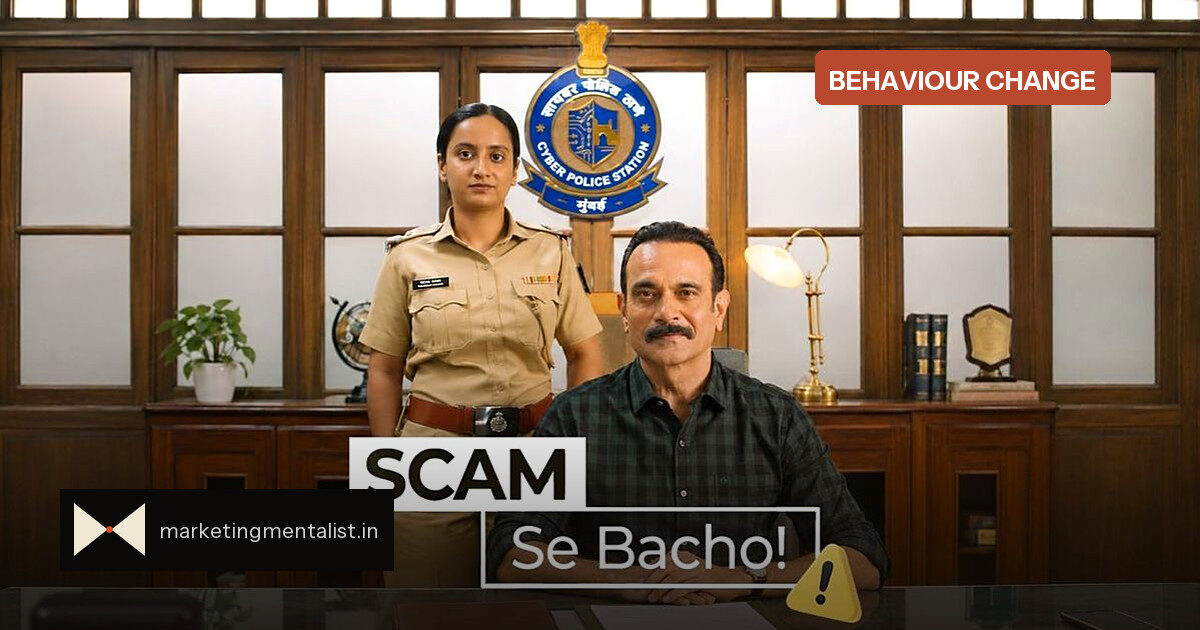
India’s public sector is borrowing a page from the creator economy. The Ministry of Information and Broadcasting, Prasar Bharati, the Securities and Exchange Board of India and the Indian Cyber Crime Coordination Centre have joined Meta to launch a government-led microdrama series on online scams. The series premieres on Instagram and will soon stream on Waves OTT.
It extends the Scam Se Bacho campaign, which Meta has run with SEBI and I4C. The new series tackles fake job offers, investment scams and digital arrest frauds, and it directs viewers to report suspicious activity and call the national cybercrime helpline 1930.
Why microdrama beats a warning
Fraud rarely arrives as a red banner. It arrives as a familiar message: an urgent job offer, a too-good investment tip, a caller claiming to be a law enforcement officer. Microdrama works because it recreates those moments in short, mobile-first scenes people already scroll through for entertainment.
Aman Jain, Meta India’s senior director and head of public policy, said awareness works best when people recognise scams and warning signs in situations that feel familiar to them. That’s a recognition play, not a fear play.
Nishant Kumar of I4C pointed to digital arrest scams, where fraudsters pose as officials and use fear plus urgency to stop victims from verifying. When those psychological levers appear inside a story, audiences can see the pressure tactic from the outside—and name it.
The behavioural engine at work
Think in Fogg terms: behaviour happens when motivation, ability and a prompt arrive at the same moment. A microdrama supplies all three. The story raises motivation by making risk personal. The familiar scene improves ability by showing the exact red flags. The helpline—1930—is the prompt.
That’s why the campaign doesn’t stop at awareness. It closes the loop. The series teaches people to pause, verify and report before a scam can succeed, turning a warning into a scripted behaviour.
From awareness to action
The series focuses on three fraud patterns:
- Fake job offers that dangle easy income to collect personal data or fees.
- Investment scams that promise high returns without verification.
- Digital arrest scams where criminals impersonate law enforcement.
By using an emerging format, the partners are also validating India’s microdrama ecosystem as a channel for public interest, not just entertainment. Gaurav Dwivedi of Prasar Bharati said the collaboration brings government, industry and creators together so storytelling can educate and empower citizens while strengthening the digital content landscape.
What brand builders can steal
For marketers, this is a live case study in making safety content bingeable. The lesson isn’t “use microdrama.” It’s that education spreads when it feels like a story, not a lecture. Familiar scenes, creator voices and a single clear action outperform a list of red flags.
Sanjay C Purao of SEBI put it in investor terms: simplify the decision and urge verification before action. That framing works for any behaviour change—make the audience feel the situation first, then give them one thing to do.
The bigger takeaway: the format that makes someone watch a creator’s video is the same one that can make them act safely. Brands that treat public messaging as content, not compliance, will win attention in the same feed where fraudsters do.